Introduction to Caliper
One of the measuring tools that are commonly applied in the engineering, construction, and manufacturing sectors is the caliper. It makes it possible to measure the inner, outer and depth dimensions of objects accurately. As technology is advancing, the calipers are changing not to be the old fashioned vernier calipers but the digital calipers, which are more accurate and convenient to use. Expertise: Calipers are used by professionals to guarantee accuracy in their undertakings, be it in the design of parts or in part checking. It is true that the right caliper will contribute greatly to productivity, minimize errors, and guarantee high-quality standards in any technical area.
Types of Caliper
There are various types of calipers and each type is suited to a particular measurement requirement. Vernier calipers are the ancient tools which can give high accuracy by using a sliding scale and vernier in order to come up with accurate results. Digital calipers are more convenient now, and the measurements are shown immediately on a digital screen with the option to change between the metric and imperial system. Dial calipers are machinist calipers that use a dial indicator to provide easy readability to mechanical reliability, thus are popular with machinists and engineers. All kinds of calipers possess their own benefits, and by choosing the most appropriate tool, a professional may select the most appropriate tool according to the accuracy needs, comfort, and usage.
Vernier Caliper
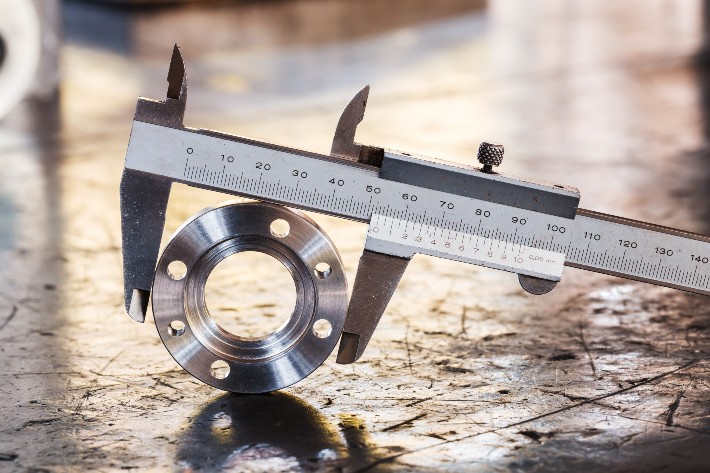
One of the oldest traditional types is the vernier caliper. It is comprised of a main scale and a sliding vernier scale that gives the accurate readings. Vernier calipers are widely used due to their reliability, durability and other features like not needing any batteries. Mechanical measurements where precision is important are often favored by engineers using them.
Digital Caliper
The modern tools include digital calipers which display measurements on an electronic screen. They are simple to operate, give immediate measurement and can be measured either in metric or imperial units. Digital calipers are commonly found in factories or other places where there is a requirement to be efficient and fast.
Dial Caliper
Dial calipers have dial indicator which displays measurements. They are a combination of the mechanical reliability of vernier calipers and easier readability. Machinists and technicians are typical users of this kind of caliper when they need to have constant and accurate measurements without manual operations.
Key Components of a Caliper
Learning the elements of a caliper is in order to maximize on its capacity. Key parts include:
Main Scale: This is the main point of measurement.
- Sliding Jaw: Slides along the main scale to take dimensions.
- Vernier Scale/Digital Display/Dial: Indicates correct figures.
- Depth Probe: Measures depth of recesses and holes.
- Lock Screw: This screw maintains the jaw so that it reads properly.
Caliper Use instructions.
Application of a caliper will give good results. Follow these steps:
- Rinse the object and the caliper with water.
- Close the jaws with the object, without pushing.
- Read the reading on the main scale and vernier/digital display.
- Check the reading again and again.
Caliper has found use in Industry.
The caliper is a tool that is indispensable in any industry given the fact it can give accurate measurements. Calipers are applied in the automotive industry to measure engineering parts and brake discs as well as other important parts that regulate safety and performance guidelines. Calipers are used in manufacturing and engineering to ensure that there is the correct tolerance which helps in quality control as well as effective production.
Automotive Industry
Calipers are extensively applicable in the automobile sector to measure parts such as brake discs, pistons, and engine parts. Proper measurements are useful in sustaining the performance and safety of the vehicle.
Engineering and manufacturing.
In the production process, calipers are used to make certain that the components of machines are precise to specifications. The calipers are also used by engineers to ensure that the products are highly maintained in quality control and development.
Medical and Laboratory Use
Medical laboratories require the use of precision tools such as calipers to measure specimens or medical equipment. They guarantee quality and precise outcomes of research and clinical use.
Woodworking and Crafting
The use of calipers in woodworking and crafting is useful in determining the dimensions of wood precisely so that the artisans can make precise and very detailed work.
Caring and Repairing of Longevity.
In order to maintain a caliper accurate and durable, it is necessary to maintain and take good care of it. At all times wash the caliper after and before use to clear dust and dirt and metal shavings which may interfere with the measurements. Do not drop the caliper or exert too much force because it may cause destruction of jaws or digital parts. When not in use place the caliper in a protective case to avoid scratches or other incidental impacts. Consistency in calibration keeps the readings accurate and so it is with either a vernier, dial or digital caliper. When these maintenance protocols are adhered to, professionals are able to prolong the life of their caliper at the same time ensuring that the accuracy of measurements remains the same.
To ensure that a caliper is useful over a few years:
- Store it in a dust-free manner.
- During handling, do not drop or use excess force.
- When not in use store in a protective case.
- Calibration is an essential measure to make sure the measurements are accurate.
Advantages of Using Caliper
A caliper has many benefits which allow it to be one of the tools that cannot be ignored when it comes to engineering, manufacturing as well as precision work. Among the primary advantages, high accuracy should be mentioned, as it enables the professionals to measure internal, external, and depth values with precise precision. Calipers are also all-purpose, and they can be used in the diverse applications in various industries like automotive, medical, and woodworking industries. The new digital callipers are quick and have easy-reading features, which eliminate errors and save time. More so, calipers are strong and durable in their use with good maintenance giving a good life cycle in years. All in all, a caliper leads to productivity, uniform quality, and it is a worthwhile investment to every professional who needs to measure the correct length.
Very fine level of accuracy and accuracy in the measurements.
- Multiple industries I have a variety of applications.
- Convenient to access and to read on the contemporary digital forms.
- Improves efficiency and eliminates mistakes.
- Lasts long and is durable when maintained.
Traps in the use of calipers.
Caliper may be used not only by professionals but also by even the experienced ones, and this factor can influence the accuracy of measurements. Using excessive force when closing the jaws is one of the mistakes that may occur and distort the object or the tool. The other common mistake is failure to clean the caliper or even a measured object resulting in inaccuracies in measurements. The most common complications are wrong interpretation of the scale, the dial or the digital screen, particularly among novices. Also, failure to calibrate regularly will lead to measurement drift with time. These errors can be avoided by understanding how to handle them and make sure you do it correctly so that you can have dependable measurements that are accurate and you prolong the life of your caliper.
Use excessive force in measurement.
- Failure to wipe down the caliper or object prior to use.
- Misreading the scale or dial.
- Omission of standard calibration.
- The prevention of such errors will provide a stable and accurate outcome.
Prospects of Caliper Technology.
The caliper technology is progressing to smarter, connected and precise tools. In the latest trends, there are digital calipers that can be wirelessly interconnected with computers or mobile devices so that the measurements become possible in real time. The connection to IoT and smart manufacturing systems will allow gathering data automatically and eliminate errors and increase productivity in industrial practice. Laser and sensor technologies can be further advanced to increase the accuracy of measurements even in challenging and high-speed production processes. These innovations will revolutionize the way people will use calipers to be more efficient, convenient, and accurate and in line with the changing needs of the engineering, manufacturing and research sectors.
Calipers of the future will be integrated with the IoT, wireless capabilities, and greater digital capabilities. Intelligent calipers can enable real time information exchange, evaluation, and remote quality management at manufacturing factories. The innovation will enhance efficiency, accuracy, and automation in the industrial processes.
Conclusion
A caliper is not just a measuring device but it has become a symbol of accuracy and trustworthiness in different industries. The caliper is used in the automotive engineering field, medical laboratories, among others, to make proper measurements and maintain quality standards. The type of caliper to be used is determined by your needs: vernier, digital, or dial. Proper use, maintenance and awareness of the general errors increase the lifespan and increase the performance. Due to the development of new technology, calipers are developing with smarter and more efficient designs. High-quality caliper provides accuracy, productivity and value in the long-term to both the professionals and hobbyists.
About the Author