In the vast and often intimidating world of spirits, few names evoke a sense of accessibility and effortless character quite like Black Velvet Whiskey. Often referred to simply as “Black Velvet,” this Canadian export has carved out a unique space in the global market, positioning itself as the go-to choice for those who value a clean, light, and—true to its name—velvety smooth drinking experience. Whether you are a seasoned connoisseur or a casual enthusiast looking for a reliable mixer, understanding the heritage, craftsmanship, and profile of this iconic brand is essential.
H3: The Genesis of Smooth: A History Rooted in Heritage
The story of Black Velvet Whiskey is not just a tale of distillation, but one of visionary branding and Canadian tradition. While the brand’s legacy is often associate with the 20th century, its spiritual roots trace back significantly further.
The Gilbey Connection and the 1946 Debut
The foundation of the brand began with the Gilbey brothers, Walter and Alfred, who established themselves in the spirits industry in 1857 after returning from the Crimean War. However, it wasn’t until 1946 that the specific blend we know today was develop in Toronto, Ontario.
Originally destined to be name “Black Label,” the whiskey underwent a radical rebranding before its official market introduction in 1951. Legend has it that master distiller Jack Napier, upon tasting the final blend, was so struck by its exceptional richness and lack of harshness that he remark it felt like “black velvet.” The name stuck, and an icon was born.
From Lethbridge to Heaven Hill
Over the decades, the production moved to Lethbridge, Alberta, where the Black Velvet Distilling Company established its home in the 1970s. This location was strategically chosen for its proximity to high-quality grain fields and crystal-clear Canadian water.
The brand’s ownership has seen significant transitions, reflecting its status as a valuable asset in the global spirits portfolio:
- 1999: Diageo sold the distillery and brand to Canandaigua Brands (later Constellation Brands).
- 2019: In a landmark $266 million deal, Heaven Hill Brands acquired Black Velvet, integrating it into their prestigious family of spirits alongside names like Evan Williams and Elijah Craig.
Today, it stands as the second-best-selling Canadian whisky in the world, trailing only the ubiquitous Crown Royal.
H3: The Craftsmanship: Blended at Birth™
What truly separates Black Velvet Whiskey from many of its competitors—both Canadian and American—is its unique production philosophy. While most blended whiskies are aged separately and combined just before bottling, Black Velvet utilizes a process they call “Blended at Birth™.”
The Distillation and Aging Process
The whiskey is crafted from a high-quality mash of corn and rye, with a touch of barley malt. In the Canadian tradition, these grains are often fermented and distilled individually to capture their specific profiles.
- Column Distillation: The base spirits are distill to a high proof in copper column stills, ensuring a clean and light “high wine” spirit.
- The “Blended at Birth” Method: Unlike other brands, Black Velvet blends its rye-rich spirit with the corn-based spirit before it enters the barrel. This allows the various grain profiles to “marry” and harmonize throughout the entire maturation process.
- Premium Oak Maturation: The blend is then place into high-quality ex-bourbon barrels. The porous oak and the temperature fluctuations in the Alberta warehouses allow the whiskey to breathe, drawing out natural vanillins and tannins that contribute to its characteristic smoothness.
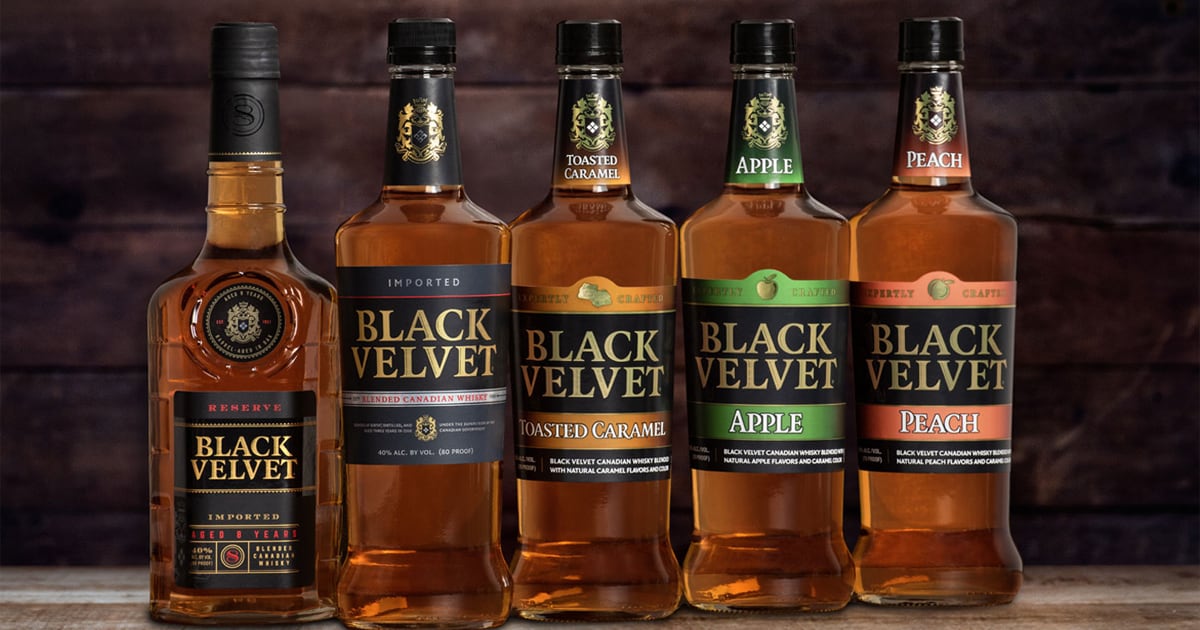
The flagship expression is age for a minimum of three years, while premium variants like the Black Velvet Reserve spend up to eight years in the barrel.
H3: Decoding the Profile: Tasting Notes and Variations
To appreciate Black Velvet Whiskey, one must understand that it is design for balance rather than aggressive intensity. It is a “social whiskey”—one that complements a conversation rather than demanding to be the center of it.
The Classic Black Velvet (Original)
- Color: A medium, warm gold that hints at its time spent in charred oak.
- Nose: Light and approachable. You’ll find immediate notes of caramel, vanilla, and toasted grain, with a very subtle undercurrent of rye spice and “burnt toast.”
- Palate: The entry is remarkably soft. A gentle sweetness predominates—think butterscotch and honey—followed by a light-to-medium body. It lacks the “burn” often found in younger whiskies, making it exceptionally easy to sip.
- Finish: Brief and clean. It leaves a faint peppery tingle from the rye and a lingering sweetness of Splenda or maple syrup.
The Black Velvet Reserve (8 Year Old)
For those seeking a bit more depth, the Reserve expression offers a more sophisticated experience. The extra five years in the barrel add layers of complexity:
- Richness: Deepened notes of cocoa-dusted hazelnut and dark fruit.
- Spice: A more pronounced rye “kick” that balances the initial sweetness.
- Mouthfeel: A creamier, more viscous texture that truly lives up to the “velvet” moniker.
Flavored Variations: Expanding the Palette
In response to modern trends, the brand has introduced successful flavored infusions, including Black Velvet Toasted Caramel, Apple, and Peach. These are typically bottle at a lower ABV (30-35%) and are design primarily for dessert-style cocktails and casual shooters.
H3: The Mixology Master: How to Enjoy Black Velvet
One of the primary reasons for Black Velvet’s enduring popularity is its versatility. Because it is a “real aged whiskey” and not cut with neutral grain spirits (unlike many lower-cost American blends), it maintains a structural integrity that holds up well in a variety of serves.
Best Mixers for Black Velvet
- Ginger Ale: The classic “Rye and Ginger.” The sweetness of the ginger ale perfectly complements the rye spice in the whiskey.
- Cola: A standard “1&1” that relies on the whiskey’s caramel notes to meld with the soda’s sugars.
- Root Beer: An underrated college classic that highlights the vanilla undertones of the spirit.
- Lemon-Lime Soda: Creates a refreshing, “crisp and lively” highball.
Cocktail Inspiration: The “Velvet Old Fashioned”
While purists might reach for a high-end bourbon, the smooth profile of Black Velvet makes for a surprisingly approachable Old Fashioned.
- Ingredients: 2 oz Black Velvet Whiskey, 2 dashes Angostura bitters, 1 sugar cube (or 1/2 oz simple syrup), orange peel.
- Preparation: Muddle the sugar and bitters with a splash of water. Add ice and the whiskey. Stir until chilled and garnish with an orange twist. The lack of harshness in the whiskey allows the bitters and citrus oils to shine.
H3: The Competitive Landscape: Market Position and Value
When discussing Black Velvet Whiskey, the topic of price is unavoidable. It is frequently category as a “bottom-shelf” or “value” whiskey, but this label can be misleading.
| Feature | Black Velvet (Original) | Mid-Range Competitor |
| Aging | Minimum 3 Years | 3 – 6 Years |
| Price (750ml) | ~$10 – $12 | $20 – $30 |
| Production | Blended at Birth™ | Post-Maturation Blend |
| Best Use | Mixing, Shots, Casual Sipping | Neat, Specialized Cocktails |
Why it Ranks High for Value:
For around $10 a bottle, Black Velvet provides a degree of drinkability that is often absent in its price bracket. While it may lack the “eyebrow-raising complexity” of a 12-year-old single malt, it avoids the “rubbing alcohol” harshness found in many cheap blends. It is a “passable-plus” spirit that encourages experimentation without the financial risk of “wasting the good stuff.”
H3: Is Black Velvet Whiskey the Right Choice for You?
Choosing a whiskey is ultimately a matter of personal preference and intended use. Black Velvet Whiskey excels in specific scenarios:
- The Budget-Conscious Enthusiast: If you want a “broke whiskey” that doesn’t cause a “hangover from hell” and actually tastes like aged grain rather than flavored vodka, this is a top-tier choice.
- The Party Host: Its smoothness makes it an “easy drinker” for a wide variety of palates, ensuring that your guests won’t be put off by an overpowering alcoholic burn.
- The Home Bartender: It is a neutral but reliable base that works exceptionally well in everything from homemade eggnog to complex coffee cocktails like an Espresso Martini.
However, if you are looking for a “contemplative dram” to sip slowly by a fireplace while dissecting notes of peat, brine, or heavy char, you might find Black Velvet a bit too “belanglos” (inconsequential). It is a tool for enjoyment, not a subject for academic study.
Final Thoughts: A Staple of the Canadian Shelf
Black Velvet Whiskey has survived through decades of industry shifts, ownership changes, and evolving tastes for one simple reason: it delivers on its promise. It is smooth, affordable, and unpretentious. By maintaining its unique “Blended at Birth” process and leveraging the natural resources of the Alberta plains, it continues to provide a velvety experience that belies its modest price tag.
Whether you are pouring it over ice, mixing it with your favorite soda, or using it as the foundation for a weekend cocktail, Black Velvet remains a testament to the idea that great whiskey doesn’t always have to be expensive—it just has to be smooth.
About the Author