In the modern home, the way we occupy space is shifting. We are moving away from rigid, formal living rooms and toward “fluid spaces”—areas that can transform from a home office to a meditation corner or a movie theater in seconds. At the heart of this interior design revolution is a deceptively simple accessory: the floor pillow.
Often dismissed as just an “extra cushion,” the floor pillow (or floor cushion) is actually a tool for mindful living. It encourages a more grounded posture, fosters intimacy in social gatherings, and adds a layer of texture to a room that a standard sofa simply cannot.
1. The Cultural Heritage of Floor Seating
Before we dive into modern aesthetics, it is important to recognize that floor pillows aren’t a “new trend.” They are a return to a way of living that has existed for millennia.
- The Japanese Tatami and Zabuton: In Japan, the Zabuton is a rectangular pillow used for sitting on tatami floors. It represents a culture of minimalism and respect for the ground.
- The Middle Eastern Majlis: Across the Arab world, the Majlis (meaning “place of sitting”) features low-slung cushions and floor pillows designed to facilitate long conversations and communal dining.
- The Indian Gaddi: In traditional Indian homes, large, firm floor mattresses and pillows create a relaxed environment for music, art, and family life.
By incorporating floor pillows into your home, you aren’t just adding décor; you are tapping into a global tradition of grounded comfort.
2. Why Your Body Loves Floor Pillows (The Ergonomic Edge)
We live in a “chair-shaped” world. Most of us spend our days hunched over desks or slumped in soft couches that cause our hip flexors to tighten and our lower backs to round.
A. Active Sitting
When you sit on a firm floor pillow, your body engages in “active sitting.” Unlike a chair that supports all your weight, sitting on the floor requires your core muscles to engage slightly to keep your spine upright.
B. Hip Mobility
Sitting cross-legged on a large floor cushion encourages external rotation of the hips. Over time, this can improve flexibility and reduce the chronic tightness associated with sedentary office jobs.
C. Posture Correction
A well-designed floor pillow (like a Zafu or a bolster) tilts your pelvis slightly forward. This maintains the natural “S-curve” of your spine, preventing the “C-slump” that leads to neck pain.
3. Types of Floor Pillows: Finding Your Perfect Match
Not all floor pillows are created equal. Depending on whether you want to read, sleep, or meditate, you’ll need a specific shape and density.
| Type | Best For | Characterisitics |
| Poufs | Extra Seating / Footrests | Tall, firm, and often knitted or leather. |
| Zabutons | Meditation / Prayer | Large, flat, and square; designed to protect knees. |
| Floor Loungers | Reading / Gaming | Long, multi-sectioned pillows that support the full body. |
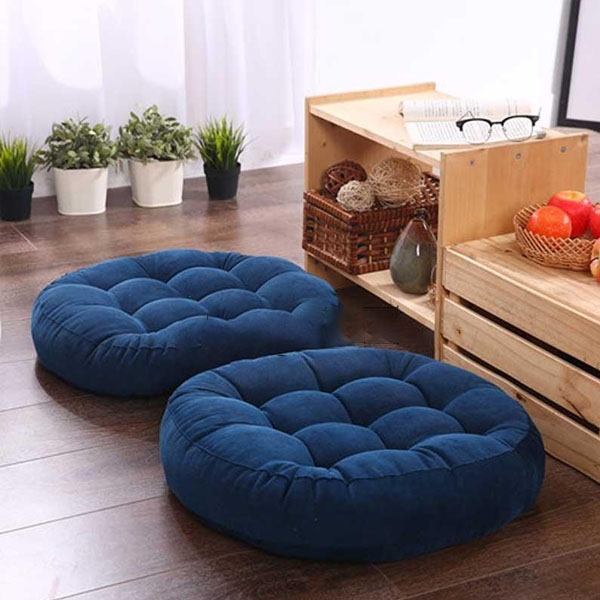
| Boho Round Cushions | Decorative / Casual Sitting | Soft, tufted, usually with tassels or intricate prints. |
| Memory Foam Mats | Kids’ Rooms / Yoga | High-density foam that provides maximum joint protection. |
4. Materials Matter: Choosing Fabrics for Longevity
Because floor pillows live on the ground, they are subject to more wear and tear, dust, and pet hair than sofa cushions. Choosing the right material is vital.
- Cotton Canvas: The gold standard for durability. It’s breathable, machine-washable, and can withstand being dragged across the room.
- Velvet: Perfect for a “Boho Chic” or “Maximalist” look. It adds a touch of luxury but requires more care (and a good lint roller).
- Leather and Faux-Leather: Excellent for high-traffic areas. You can simply wipe them clean, and they develop a beautiful patina over time.
- Jute and Seagrass: These provide a rustic, organic feel. They are incredibly tough but may be too scratchy for bare skin. These are best used as “base layers” for softer pillows.
5. How to Style Floor Pillows Like a Professional Designer
One common fear is that floor pillows will make a room look “cluttered” or like a “college dorm.” Here is how to style them with sophistication:
The “Layered Corner” Technique
Don’t just throw one pillow in the corner. Layer a large, flat jute mat on the bottom, stack two square canvas pillows on top, and finish with a smaller, round velvet cushion. This creates a visual hierarchy.
The Color Palette Rule
To keep the room looking intentional, match your floor pillows to your curtains or secondary accent colors in your rugs. If your room is neutral, use floor pillows as a “pop” of color (terracotta, mustard, or deep forest green are currently trending).
Create a “Conversation Pit”
If you have a coffee table, place four large floor cushions around it instead of chairs. This immediately lowers the energy of the room to a more relaxed, intimate level—perfect for board game nights or tea.
6. DIY: How to Make Your Own Floor Pillow
For those who love a weekend project, making a floor pillow is a great entry-level sewing task.
- Select Two Fabric Squares: Aim for 27×27 inches for a standard large cushion.
- Choose Your Fill: Use a mix of shredded memory foam for softness and polyester fiberfill for loft. For a sustainable option, use old t-shirts or fabric scraps.
- Add a Handle: A simple strap of leather or heavy webbing sewn into the side makes the pillow portable—a hallmark of high-end floor cushions.
- The Zipper: Always include a hidden zipper. You will want to wash the cover eventually!
7. Floor Pillows for Kids and Pets
If you have children or furry friends, floor pillows aren’t just décor—they are playgrounds.
- For Kids: Look for “Floor Loungers” that are essentially five pillowcases sewn together. You can stuff them with standard bed pillows to create a portable bed for sleepovers or reading nooks.
- For Pets: Many dogs actually prefer a large, human-grade floor pillow over a traditional pet bed because the materials are often higher quality and more breathable.
8. Maintenance: Keeping the Ground Clean
To prevent your floor pillows from becoming “dust magnets,” follow this maintenance schedule:
- Weekly: Shake them out outside to remove loose dust.
- Monthly: Vacuum with an upholstery attachment.
- Seasonally: Most covers should be washed on a cold, gentle cycle and air-dried to prevent shrinking. If the filling has “deflated,” add a few handfuls of new fiberfill to restore the shape.
9. Conclusion: Embracing the Low-Life
The floor pillow is more than just a piece of furniture; it is an invitation to slow down. In a fast-paced world, choosing to sit on the floor changes your perspective. It makes your home feel more spacious, your gatherings more informal, and your body more aligned.
Whether you are looking for a meditation cushion to start your morning or a giant velvet pouf to anchor your living room décor, the floor pillow is a small investment that yields massive returns in comfort and style.
About the Author