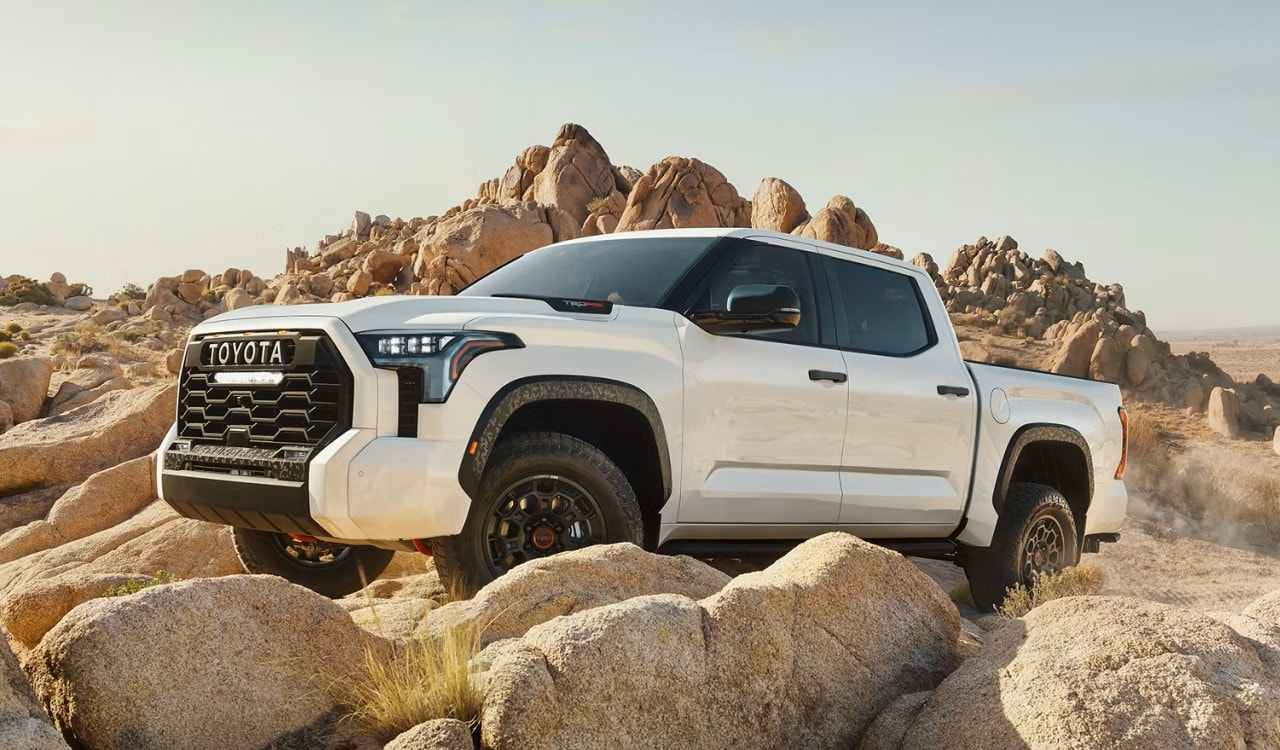
The Toyota Tundra lease stands as a monumental figure in the full-size pickup segment, known for its sheer capability, legendary reliability, and the unwavering promise of durability that defines the Toyota brand. Since its complete redesign for the third generation (starting with the 2022 model year), featuring the powerful twin-turbo V6 engine (and the optional i-FORCE MAX hybrid system), the Tundra has become a highly sought-after truck. For many consumers, especially those in the United States and Canada, the question is not simply whether to drive a Tundra, but how to finance it—and for a growing number, leasing presents a compelling financial and practical solution.
Leasing a Toyota Tundra in the current market environment (2025 models) involves a unique balance of the truck’s inherent strengths—namely its strong residual value—and the dynamics of the leasing process itself. A deep dive into the cost structure. The pros and cons, and the essential financial terminology is crucial for any potential lessee.
1. The Financial Foundation: Understanding the Lease Equation
To grasp why leasing the Tundra can be advantageous, one must first understand how a lease payment is calculated. Unlike financing, where payments cover the total price of the vehicle. A lease payment primarily covers the vehicle’s depreciation over the lease term, plus interest (known as the money factor) and fees.
The equation essentially boils down to:
$$\text{Monthly Payment} \propto (\text{Negotiated Price} – \text{Residual Value}) + \text{Money Factor}$$
The Crucial Role of Residual Value
The Residual Value is the projected value of the Tundra at the end of the lease term (e.g., 36 months). It is expressed as a percentage of the Manufacturer’s Suggested Retail Price (MSRP) and is set by the leasing company. Typically Toyota Financial Services (TFS).
- Toyota’s Advantage: Toyota trucks, including the Tundra, are historically famous for holding their value exceptionally well. This robust resale performance translates directly into a high residual percentage in the lease market (often seen in the mid-to-high 60% range for shorter terms).
- Leasing Benefit: A higher residual value means the depreciation (the difference between the initial price and the residual value) that the lessee is responsible for is smaller. This, in turn, results in lower monthly lease payments compared to trucks with poorer residual performance, even if the MSRPs are similar.
For example, a Tundra with an MSRP of $\$55,000$ and a $64\%$ residual value after 36 months means the lessee is primarily paying for the depreciation of $\$19,800$ (plus money factor and fees). This contrasts sharply with a truck with a $50\%$ residual, where the depreciation cost is $\$27,500$.
2. The Lure of Leasing: Key Advantages of the Tundra
Leasing the Toyota Tundra lease appeals to a specific segment of truck buyers by offering significant benefits:
a) Lower Monthly Payments and Upfront Costs
As demonstrated by the high residual values, the Tundra generally offers lower monthly payments than a comparable 60- or 72-month financing agreement. Search results confirm that popular Tundra trims (like the SR and SR5) can be leased for monthly payments often in the $500 to $600 range (with a typical amount due at signing), while higher trims (like the Platinum or 1794 Hybrid) push into the $700 to $850+ range. This reduced burden allows drivers to afford a higher trim level than they might if financing.
Furthermore, many lease deals require a lower amount due at signing (Down Payment and fees) compared to the down payment required for a loan, freeing up capital for other uses.
b) Always Under Warranty and Access to New Tech
Most Tundra lease terms are 36 or 39 months, a period that coincides almost entirely with Toyota’s comprehensive factory warranty. This means the lessee is driving a vehicle that is fully covered for unexpected mechanical costs, effectively eliminating the major repair bills associated with long-term ownership of an aging vehicle.
Additionally, leasing is the ideal strategy for those who prioritize having the latest technology—from safety features like Toyota Safety Sense $2.5$ to cutting-edge infotainment—as they can switch into a brand-new model every three years.
c) Avoiding Long-Term Depreciation Risk
While the Tundra’s residual value is generally strong, market conditions change. By opting for a closed-end lease, the lessee is protected from negative equity if the market value of the truck drops below the contracted residual value. At the end of the term, the lessee simply hands the keys back, and the leasing company assumes the risk of the truck’s actual resale value.
3. The Truck Lease Trade-Offs: Disadvantages and Pitfalls
Leasing a full-size pickup, however, is not without its limitations, especially for drivers who rely on their Tundra as a heavy-duty work vehicle.
a) Mileage Restrictions: The Primary Constraint
The most significant constraint of leasing is the annual mileage limit. Typically set at $10,000$, $12,000$, or $15,000$ miles per year. For truck owners who frequently tow, travel long distances for work, or use the Tundra as a primary family vehicle, these limits can be easily exceeded.
- Cost of Over-Mileage: Exceeding the limit results in hefty per-mile fees (often around $0.15 per mile). For example, a driver who exceeds a $12,000$ mile annual limit by $5,000$ miles per year over a 3-year lease could face an additional charge of $2,250 at the lease end. This high cost makes leasing unsuitable for high-mileage drivers.
b) Customization and Wear-and-Tear Fees
Since the Tundra must be return to the lessor in a certain condition. The lessee is highly restrict in terms of customization. Aftermarket modifications common to trucks—such as lift kits. oversized tires, or performance exhausts—are generally prohibited unless professionally reverse before turn-in.
Furthermore, excessive wear and tear that exceeds the standard definition (e.g., deeply scratched bed liner. Ripped interior, non-repaired body damage) will result in significant charges at the end of the term.
c) No Equity Building
Unlike financing, where every payment contributes toward ownership and building equity, lease payments provide no equity. At the end of the term, the lessee owns nothing unless they exercise the lease-end buyout option. This is a critical factor for those who plan to keep their Tundra for 8 years or more. Where the long-term cost of ownership is generally lower than perpetually leasing new vehicles.
4. Navigating the Lease-End Decision
One of the unique flexibility points of the Toyota Tundra lease comes at the end of the term. Largely due to its high actual resale value:
- Return the Vehicle: The easiest option, assuming mileage and wear limits are met. The lessee pays a disposition fee and walks away.
- Lease Buyout: The lessee has the contractual right to purchase the Tundra for the pre-determined Residual Value. Historically, many Tundra leases have offered an opportunity for instant equity. Because the truck’s actual market value at lease-end is often higher than the contracted Residual Value. In this scenario, the lessee can buy the truck and either keep it or immediately resell it for a profit. Using that money toward a down payment on their next vehicle.
Conclusion: The Strategic Choice
Leasing the Toyota Tundra lease is a strategic financial decision best suite for the motorist who values:
- Predictable and lower monthly budgeting.
- Driving a new, warranty-covered vehicle every 3 years.
- The potential financial hedge against market depreciation risk.
However, potential lessees must be absolutely certain. They will adhere to the mileage restrictions and maintain the Tundra to the required standards. For the driver who needs a truck for heavy-duty, high-mileage work or who intends to heavily customize their vehicle. Purchasing or financing the Tundra remains the more sensible long-term choice. The Tundra’s exceptional residual value. However, ensures that for the moderate-mileage driver. A lease remains one of the most cost-effective ways to enjoy this iconic American-market truck.
About the Author