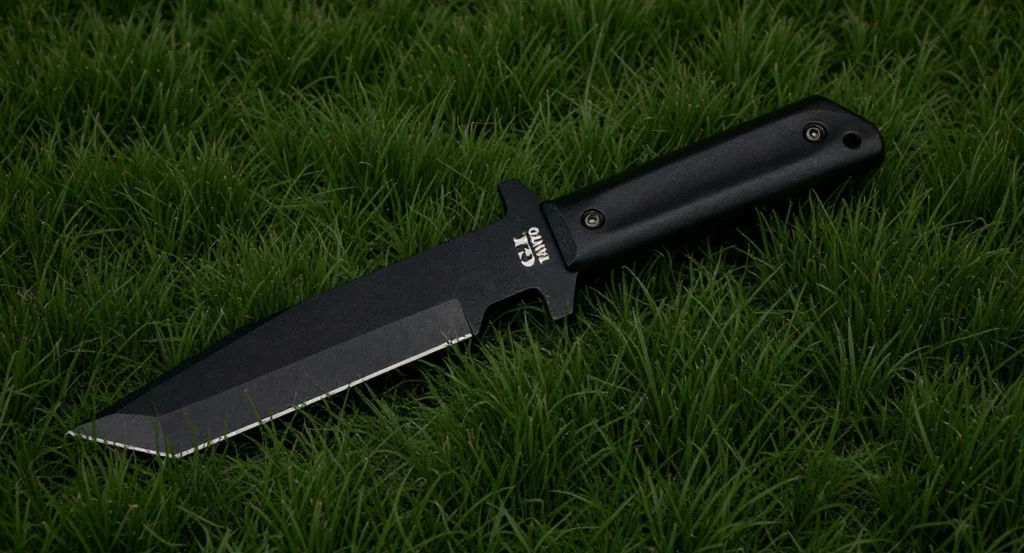
In the world of knives, few blade designs stand out as clearly and powerfully as the Tanto blade. With its unmistakable angular tip, robust profile, and combat-ready structure, the Tanto has earned respect for centuries — from ancient samurai warriors in Japan to modern tactical enthusiasts around the globe. This blade isn’t just a cutting tool; it’s a weapon, a survival instrument, and a piece of history that continues to evolve.
If you’re looking for authoritative, SEO-friendly, easy-to-rank content for guest posting or building topical authority in the knife, survival, EDC (Everyday Carry), or outdoor niche — this comprehensive guide covers everything readers want to know about the Tanto blade.
What Is a Tanto Blade?
A Tanto blade is a knife design characterized by its strong point, straight or slightly curved edge, and angular tip that meets the primary edge in a sharp transition rather than a smooth curve like traditional blades. This geometric shape makes the Tanto ideal for piercing, thrusting, and heavy-duty tasks.
Originally rooted in Japanese sword-making, the modern interpretation has transformed into a tactical powerhouse used in military knives, folding pocket knives, survival tools, and combat weapons.
Key Features of a Tanto Blade:
- Reinforced tip for excellent puncturing ability
- Strong spine for durability and pressure resistance
- Flat or minimal belly for controlled slicing
- Angular grind instead of a curved drop-point style
- High strength and tactical reliability
Origin & Historical Background
The Tanto blade traces its origins back to feudal Japan, where it was used by samurai as a compact weapon for close combat. Unlike katanas which served as longer primary swords, the Tanto was short, fast, and lethal at close range.
Historically used for:
- Penetrating armor gaps
- Self-defense in tight proximity
- Ceremonial purposes
- Backup sidearm for warriors
Tanto blades were often beautifully crafted with artistic engravings, making them both functional weapons and cultural artifacts.
Modern Evolution of the Tanto Blade
While the traditional Tanto had a slight curve, the American Tanto blade, popularized in the late 20th century, features a more angular transition with a prominent secondary point. Tactical knife designers adapted the style to prioritize tip strength and tactical penetration, especially for law enforcement and military applications.
Today, Tanto blades are commonly seen in:
- EDC folding knives
- Combat fixed blades
- Tactical multi-tools
- Survival knives
- Self-defense carry weapons
The blend of historical beauty and modern utility makes it a favorite among collectors and professionals alike.
Why Tanto Blades Are Popular Today
Tanto blades offer a range of strong advantages that make them stand out from other blade styles.
1. Unmatched Tip Strength
The reinforced angular point distributes pressure more effectively than standard curved tips, making it one of the strongest knife points for stabbing and puncturing.
2. Tactical Precision
Designed for combat and defense, the Tanto excels at thrusting through tough material like leather, plastic, or even light sheet metal.
3. Durable for Hard Use
The thick spine and structural geometry help resist breakage, even under heavy loads or prying tasks.
4. Low Maintenance Grind
Sharpening straight edges is easier compared to curved belly knives.
5. Stylish & Aggressive Appearance
The angular aesthetics appeal to knife collectors, martial artists, and tactical gear fans.
Common Uses of a Tanto Blade
Combat & Tactical Use
Originally built for war, Tanto remains a formidable self-defense and offensive blade.
Survival & Bushcraft
Although not as curved for slicing food or wood shaving, its strong tip excels at heavy survival work like:
- Piercing tough surfaces
- Opening cans or metal objects
- Scraping and prying
Everyday Carry
Compact folding Tanto knives are popular in EDC setups due to reliability in emergency situations.
Emergency & Rescue Scenarios
Cutting through tough seatbelts or breaking hard surfaces is more effective with reinforced tips.
Utility Cutting Tasks
Packaging, rope, zip ties, and industrial materials are easily handled by a Tanto edge.
Tanto Blade vs Drop Point vs Clip Point
Choosing a blade style depends on intended use. Here’s a quick comparison:
| Feature | Tanto Blade | Drop Point | Clip Point |
|---|---|---|---|
| Tip Strength | Excellent | Moderate | Medium |
| Piercing Ability | Superior | Good | Good |
| Slicing Performance | Moderate | Excellent | Very Good |
| EDC Versatility | High | Very High | High |
| Combat Efficiency | Excellent | Moderate | High |
| Sharpening Difficulty | Moderate | Easy | Easy |
If slicing is the priority, drop point may win; if tip strength and toughness matter, Tanto dominates.
Blade Geometry Explained
A Tanto blade has two primary cutting surfaces:
- Main edge: Straight cutting edge used for slicing linear cuts.
- Secondary edge: The tip section that meets the primary edge at an angle — ideal for precision puncture work.
This flat grind design increases:
- penetration power
- structural durability
- energy transfer during thrusts
Unlike curved blades where pressure spreads over a larger area, a Tanto channel forces pressure into a focused point.
Types of Tanto Blade Designs
Not all Tanto blades look the same. There are variations based on grind, tip angle, and blade adaptation.
Traditional Japanese Tanto
Slightly curved with artistic finishes.
American Tactical Tanto
Flat edge with angular reinforced point — most common modern form.
Modified Tanto
Smooth transition between edges offers better slicing capability.
Double-Edged Tanto
Sharpened top edge for combat-oriented performance.
Chisel Grind Tanto
Single bevel edge used in some tactical or industrial variations.
Each design caters to different use cases, giving buyers flexibility based on preference.
Best Materials for Tanto Blades
A knife is only as good as the steel it’s made from. Tanto blades are often forged from high-strength steels such as:
- Carbon Steel (1095, 5160)
- Stainless Steel (440C, AUS-8)
- High-Grade Alloys (S30V, S35VN, D2)
- Tool Steel
- Damascus steel for premium collectables
Which is best?
- For toughness → 1095 Carbon Steel
- For corrosion resistance → Stainless Steel
- For premium use → S30V or S35VN
- For aesthetic custom blades → Damascus
Steel choice should match environment and usage purpose.
Sharpening a Tanto Blade
Some believe sharpening a Tanto is complicated, but with technique, it’s simple.
Sharpening Steps:
- Sharpen the main edge separately.
- Move to the secondary tip edge.
- Maintain angle consistency.
- Avoid rounding the tip transition.
- Use whetstone or guided sharpeners for best results.
Straight edges make sharpening easier than large bellies, but discipline is required to preserve the geometric point.
Tanto Blades in EDC (Everyday Carry)
Many modern users carry Tanto folding knives daily for reliability. A Tanto blade pairs well with:
- Pocket clips
- Assisted opening mechanisms
- Liner or frame locks
- Lightweight handle options (G-10, Micarta, titanium)
EDC owners choose Tanto blades because they want a tool that performs under unexpected stress. Whether opening boxes or cutting paracord — a Tanto is always ready.
Legal Considerations
Knife laws vary by region. Before carrying a Tanto blade:
- Check local concealed carry laws
- Some states restrict blade length
- Fixed blades may have additional rules
It’s always wise to stay informed.
Why Tanto Blade Articles Rank Well for SEO
Knife and gear content has high search demand. People regularly search:
- tanto blade benefits
- tanto vs drop point
- best tanto folding knife
- how to sharpen tanto
- tactical blade designs
This topic draws consistent traffic from:
🔹 EDC community
🔹 Survival & outdoor enthusiasts
🔹 Knife collectors
🔹 Tactical and military audiences
🔹 Amazon shoppers & product buyers
Evergreen content like this can generate long-term search results.
Frequently Asked Questions (FAQ)
1. What is a Tanto blade best used for?
Piercing, tactical use, heavy-duty tasks, and EDC reliability.
2. Is a Tanto good for self-defense?
Yes — its strong tip and stabbing power make it excellent for defensive situations.
3. Is a Tanto good for survival bushcraft?
It performs well for prying and piercing, though not the best slicer for food prep or wood shavings.
4. How do I sharpen a Tanto blade correctly?
Sharpen each edge separately to maintain the characteristic angle.
5. Is Tanto durable?
Extremely. One of the toughest blade profiles available.
Conclusion – Why the Tanto Blade Remains a Timeless Choice
A Tanto blade is more than a knife profile — it’s a cultural artifact, tactical tool, and reliable everyday companion. From samurai origins to modern tactical gear, this blade design has proven its durability, strength, and functionality. Whether used for survival, combat, utility, or collection, Tanto knives continue to stand strong in performance and design.
For anyone looking to dive into the knife world — whether as a collector, EDC carrier, or outdoor enthusiast — the Tanto blade is a worthy investment. It’s sharp, strong, stylish, and built to last.
This article offers readers not only knowledge but also practical insight — making it perfect for blogs, product roundups, comparison posts, or affiliate-driven content.
About the Author