How to Steam Milk Introduction.
Mastering the art of steaming milk is among the best coffee techniques that you can learn at home. It is not merely the addition of heat to milk, but changing its texture and taste. Properly, How to Steam Milk is creamy, a little sweet, and contains smooth microfoam, which mixes with espresso well.
Some individuals are scared that cafes have costly machines yet the reality remains that it is the technique that counts and not the tool. Some training and knowledge enable you to make coffeehouse quality beverages in your personal kitchen and savor each cup you make.
The Science of Milk Steaming.
The art of steaming milk consists in learning the interaction of the heat, the proteins, fats, and air. During steaming of milk, proteins unfold and entrap minute air bubbles to form smooth microfoam. Natural sugars are also released by gentle heat and this will make the milk even sweeter in taste without sugar being added. The creamy texture of the foam is made by the fat content which gives it a rich and stable texture.
What Occurs to Milk During Heating.
Meanwhile, soothing heat causes natural sugar to be released by the sugars. This is the reason why well steamed milk is sweet without sugar in it.
Why Control of Temperature is crucial.
When milk is overheated, the proteins are destroyed and cause thin texture. Milk is also bitter and burnt when it is hot. When steamed milk is not watery, but rather it has a velvety texture, it is possible only under a very accurate temperature control.
Selecting the Milk best to Steam.
To get the resulting creamy texture and smooth foam, it is important to choose the best milk to steam. Whole milk is best since it is rich in fat that makes microfoam rich and stable. Even skim or low fat milk can foam although it has a light texture and larger bubbles. Oat, soy or almond silks are substitutes, and they all are different and should be handled in a special way so as not to separate or form lumpy foam. and consistency meaning that your coffee beverages would be almost indistinguishable to those found in cafes each time you steam milk.
Whole Milk, Low fat Milk.
The creamiest texture is whole milk since it has high fat content in it which makes it rich and stable in foam. Low fat milk will form bigger bubbles and be less dense in the mouth yet can still be good in the lattees.
Plant Based Milk Options
Oat milk is known to have smooth foam and soy milk has the ability to form thick microfoam on condition of being treated with gentleness. Almond milk does not foam as much but can be used in the light drinks. The options will also need a gentler method to prevent detachment and the formation of large bubbles.
Necessary Milking Utensils to Steam Milk.
In order to steam milk, some simple yet very essential milking implements are required to make the task simple and risk-free. A stainless steel milk pitcher would be necessary as it regulates the heat and assists in forming silky foam. whereas to wipe the wand after each use, one will require a soft cloth. Clean and proper tools will guarantee a good taste, hygiene and always same results each time you steam milk.
Espresso Machine Steam Wand.
The conventional barista tool is a steam wand. It forces hot steam directly into the milk and draws in air, producing microfoam in a short period of time and with consistency. It is the most effective method to learn how to steam milk like a professional.
Manual Steam Alternatives.
In case you do not have a machine, then you can use a French press, handheld frother or a jar technique. They can be time consuming but these techniques enable you to make creamy foam at home.
Step by Step Tutorial on a Steam Wand.
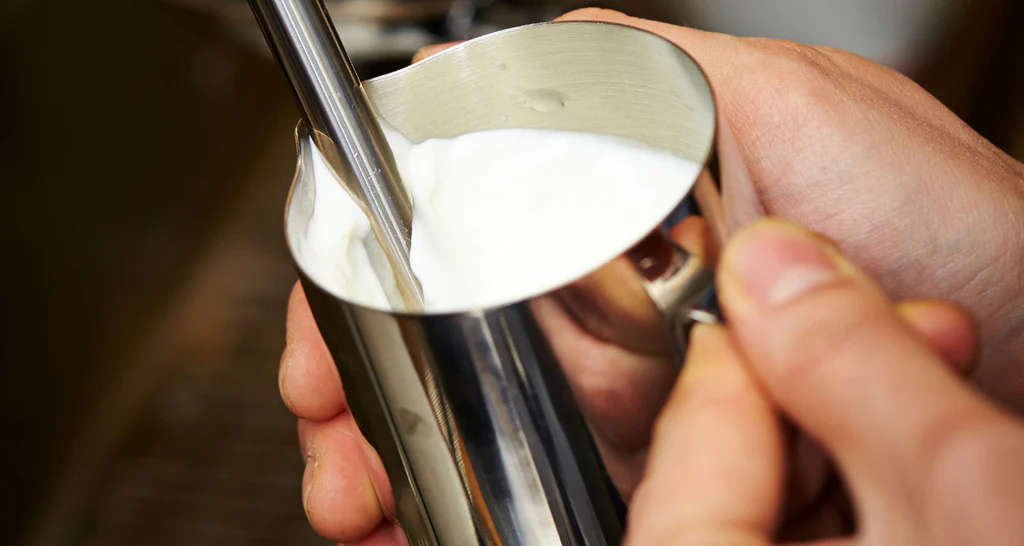
A step by step guide to a steam wand would ensure that you learn to steam milk like a pro. The first step is to pour the cold milk in a metal pitcher, leaving it to open up. Dip the steam wand just under the surface and activate it to add air making the bottom foam. A couple of seconds later, push the wand even further down and tilt the pitcher to create the whirlpool, which flattens the milk to silky microfoam. Feel the temperature, and terminate when the pitcher becomes very hot. And lastly, wipe the wand and discharge a little puff of steam to clean it.
Preparation of Pitcher and Milk.
Use fresh milk directly out of the refrigerator. Cold milk provides you with more time to stretch and texture before becoming overheated. Put it into a metal pitcher and leave room to expand.
Stretching the Milk
Put the tip of the steam wand slightly below the surface and switch on the steam. You ought to hear the sound of a piece of paper tearing. This phase incorporates air and forms the foundation of foam.
Texturing the Foam
Following a brief period of time, dip the wand deeper in the milk. Lean the pitcher a little and make the milk whirlpool. This movement coats the bubbles into creamy microfoam.
Making a Good Decision at the Right Time.
The steam should be turned off when the pitcher is too warm to be held easily. Clean the wand instantly and spurt out some steam to clear any remaining milk.
How To Steam Milk Without a Milking Machine.
It is easy and efficient to steam milk without a milking machine when you have the simplest kitchen appliances. To begin with, warm the milk in a saucepan until it is not boiling. Add the warm milk to a jar or French press and shake or pump it until there is thick foam on top. Also, a handheld frother can be used to make the texture smooth in the shortest time possible. Once it foams, again heat the milk a couple of seconds in order to stabilize the foam and turn it more creamy and fit in your coffee.
French Press Technique
Warm milk in a pot, and press it in a French press. Continued pumping of the plunger is necessary until thick foam is made. Bake the dish a little until it becomes serving temperature.
Handheld Frother Method
Heat the milk and then put in the frother which is placed just below the surface and moved gently. This forms fine foam and does not splash.
Jar Shaking Method
Heat the milk and then pour into a jar and close tightly and shake it until it becomes frothy. Take the cover off and briefly place in the microwave to cool down the foam.
Some of the most prominent errors and the methods to avoid them.
Adding Too Much Air
Massive bubbles will be formed in case of excessive addition of air. Be very mild in tearing.
Overheating the Milk
Excessively hot milk becomes uncouth, tasteless. Always leave the heating off when the pitcher is hot to the touch.
Cleaning of Skipping equipment.
Skipping equipment require cleaning to ensure hygiene and good flavour of milk. Wipe the steam wand or frother using a clean damp cloth after each use to clean off any remnants of milk. Give it a blast of steam to get any milk that is stuck in the nozzle.
The residue of old milk has an impact on flavour and hygiene. Wash your tools as soon as you use them.
Milk Drink Textures.
- Latte Milk
Cappuccinos require skim milk with little bubbles. Emphasis should be placed on turning the milk.
- Cappuccino Milk
Cappuccino involves a more dense foam on it. Draw out the milk a notch further.
- Flat White Milk
This beverage must have extremely smooth texture and slightly invisible foam. It demonstrates that one has mastered the art of steam milk.
Latte Art for Beginners
- Preparing the Espresso
Good crema espresso offers the best latte art surface.
- Basic Pouring Motions
Start pouring higher upwards then get closer and wiggle the pitcher lightly to create simple shapes.
Conclusion
Steaming milk does not require acquiring the most costly equipment to learn, it only takes a lot of patience, observation and practice to learn. Each of the cups teaches you some new stuff about sound, temper and texture. Your foam might be irregular at the very beginning or your milk might not be tasting so good, but all the mistakes will make you go in the right direction. After a period of time, your hands know how to stretch and spin and your eyes are aware when milk is silky and sweet. The ability helps to make your life confident, creative, and comfortable. Your home brewed coffee will soon become something that was made with care and not a haste.
About the Author