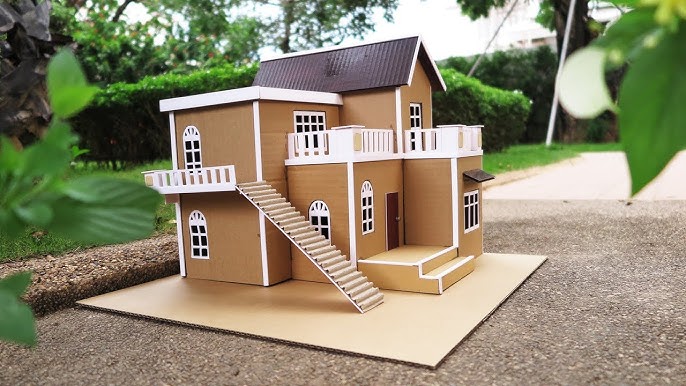
When you hear the phrase cardboard house, it may sound like something temporary, fragile, or even playful. Many people associate cardboard with packaging boxes, school art projects, or moving supplies—not as a building material. However, the world is changing rapidly. With sustainability becoming a global priority, designers, architects, and environmental experts are exploring innovative ways to build homes that are eco-friendly, cost-efficient, lightweight, and accessible. One surprising solution gaining global attention is the cardboard house.
Today, cardboard houses are more than creative experiments. They represent a shift toward green architecture, minimal waste, and affordable housing options. From disaster relief shelters and tiny eco-homes to fully furnished modern structures, cardboard houses are proving that simple materials can achieve incredible results. Their growing popularity sparks an important question: Could cardboard homes become a mainstream housing trend in the future?
What Is a Cardboard House?
A cardboard house is a structure built primarily using layers of reinforced cardboard—often treated, laminated, or combined with other sustainable materials to improve strength and lifespan. Unlike traditional houses built from wood, brick, or concrete, cardboard houses rely on engineered cardboard panels designed to resist moisture, load pressure, and environmental stress.
While the concept may seem unconventional, cardboard is surprisingly strong when compressed in layers. Its honeycomb core creates a durable structure that withstands weight extremely well. Engineers compare the strength of layered cardboard to lightweight wood panels, making it suitable for modular construction.
In short, a cardboard house is:
- Lightweight yet structurally sound
- Sustainable and recyclable
- Affordable to produce and assemble
- Customizable for small to medium-sized living spaces
Cardboard houses challenge the traditional idea of what a home must be.
The Rise of Cardboard Architecture
Cardboard architecture didn’t happen overnight. It started with experimental shelters, disaster-relief structures, and eco-friendly pavilions. Famous architects like Shigeru Ban, a Pritzker Prize winner, led the movement by proving cardboard can be used in real architecture. His cardboard tube buildings have been used in earthquake-hit regions, refugee camps, and public installations across the world.
As cities face rising housing costs and climate concerns, cardboard houses are gaining attention as a practical alternative to expensive, resource-heavy construction. They serve both permanent and temporary uses, making them versatile and accessible.
Why Cardboard Makes Sense as a Building Material
Cardboard is underestimated. We throw it away daily, but few realize its structural potential. Here’s why it works:
✔ Lightweight
Materials are easy to transport, reducing shipping costs and manual labor.
✔ Strong Under Compression
Layered cardboard holds weight remarkably well and can form stable wall panels.
✔ Easy to Assemble
Panels often interlock like puzzle pieces, ideal for DIY builds.
✔ Eco-Friendly
Made from recycled fibers, biodegradable, and emits far less CO2 than cement production.
✔ Affordable
Building a cardboard house costs a fraction of traditional materials.
Cardboard is strong enough to stand, gentle enough on the environment, and flexible enough to shape creatively.
How Cardboard Houses Are Built
Building a cardboard house involves careful engineering. While simple versions may resemble paper crafts, modern designs follow architectural standards.
Step-By-Step Overview:
- Design & Planning
Architects plan dimensions, ventilation, structural load, and layout. - Cardboard Panel Manufacturing
Cardboard is laminated, moisture-treated, and layered for strength. - Cutting & Interlocking
Panels are shaped into walls, floors, and roofing components. - Assembly
Panels are locked together with adhesives, bolts, or folding joints. - Coating & Protection
Houses are coated with waterproof, fire-resistant materials. - Interior Finishing
Flooring, insulation, lighting, and decor are installed.
Although cardboard is delicate when untreated, engineered cardboard houses can last 10–50 years with proper sealing and maintenance.
Durability: Can a Cardboard House Really Last?
Yes—when designed properly. Cardboard becomes durable through:
- Water-resistant coatings
- Fire-retardant layers
- Multiple reinforced corrugated sheets
- Structural framing with wooden or metal supports
- Elevated foundations to avoid ground moisture
Many cardboard homes withstand rain, wind, and daily use. Some models are even insulated for winter climates. Durability improves when combined with other eco-materials like bamboo, felt, or recycled plastic.
Cardboard houses aren’t just temporary shelters—they can function as real homes.
Where Cardboard Houses Are Used
Due to their flexibility and affordability, cardboard houses are used worldwide for different purposes.
1. Emergency & Disaster Relief
Quick housing after earthquakes, floods, or wars. They can be assembled rapidly thanks to lightweight materials.
2. Low-Cost Eco Housing
Sustainable living communities and tiny home projects are adopting cardboard housing solutions.
3. Temporary Structures & Events
Art festivals, exhibitions, pop-up cafes, and pavilions frequently use cardboard for innovative installations.
4. Backyard Studios and Playhouses
Families build small cardboard spaces for kids, reading nooks, or hobby rooms.
5. Educational & DIY Projects
Students and architects use cardboard to explore design and structural engineering.
6. Homeless Shelters
Compact foldable cardboard shelters can protect vulnerable populations in winter.
The versatility of use makes cardboard houses relevant to both developing and developed nations.
Benefits of Cardboard Houses
Cardboard houses offer numerous advantages that make them a favorable option in modern architecture.
✔ Sustainable
Made from recycled materials and recyclable after use.
✔ Cost-Effective
Lower construction cost vs. traditional homes.
✔ Fast Construction
Many cardboard houses can be assemble within hours or days.
✔ Portable
Panels can be disassemble and transport easily.
✔ Customizable Design
Cut into curves, modern shapes, or tiny house layouts.
✔ Energy Efficient
Can be insulated well for temperature control.
As a green building solution, cardboard stands out remarkably.
Limitations & Challenges
Every innovative material comes with hurdles, and cardboard is no exception.
✘ Vulnerable to Water Without Proper Coating
Moisture is the biggest threat to untreated cardboard.
✘ Fire Safety Must Be Engineered
Extra coatings or flame-retardant layers are necessary.
✘ Limited Height Structures
Ideal for small homes, not multi-story buildings.
✘ Requires Maintenance
Weatherproof layers need refreshing over time.
Despite challenges, research continues to improve cardboard building technology.
Cost of Building a Cardboard House
Costs vary depending on:
- Size of the house
- Type of cardboard panels
- Coating and insulation needed
- Whether professional labor is involve
Small DIY cardboard houses can cost as little as a few hundred dollars, while professionally designed permanent cardboard homes range from a few thousand to tens of thousands—still cheaper than conventional homes.
Affordable housing is one of the strongest arguments in favor of cardboard architecture.
Design Possibilities: More Creative Than You Think
Cardboard houses aren’t limit to box shapes. With laser cutting and modular panel design, architects create:
- Rounded eco-pods
- Minimalist tiny homes
- Modern geometric cabins
- Foldable portable shelters
- Artistic curved structures
- Playful family cottages
Cardboard bends, folds, and curves—unlocking creativity traditional materials often limit. It allows people to redefine architecture visually and functionally.
Environmental Impact & Sustainability Value
Housing construction is responsible for huge amounts of global carbon emissions. Cement and steel production alone account for significant environmental harm. Cardboard houses reduce this impact dramatically.
Sustainability advantages include:
- Uses recycled material
- Requires low energy production
- Reduces landfill waste
- Biodegradable end-of-life cycle
- Supports circular economy models
Choosing cardboard housing is a step toward green living and climate-friendly construction.
DIY Cardboard House Projects
For hobbyists or parents, cardboard house building is also a fun DIY activity. Kids love it—creativity, painting, crafting, and building promote STEM learning.
DIY ideas include:
- Children’s playhouse
- Craft studio
- Cat house or pet shelter
- Backyard tiny hut
- Indoor reading cabin
It can be a weekend project or a long-term sustainable build.
Future of Cardboard Houses: Will They Become Mainstream?
With growing awareness around climate change, affordable living, and creative architecture, cardboard houses may see widespread adoption in the future. They may not replace traditional homes entirely, but they could become a major solution in:
- Disaster response housing
- Low-income community development
- Eco-house suburbs
- Student housing
- Temporary event structures
The combination of affordability and sustainability makes cardboard architecture a meaningful innovation.
Conclusion
A cardboard house may sound unconventional, but it reflects a future where sustainability, creativity, and affordability meet. From rapid emergency shelters to artistic eco-homes, cardboard construction opens doors for innovative architecture that respects both people and the planet. It proves that powerful ideas can emerge from simple materials.
As global housing challenges increase, cardboard houses offer hope—lightweight, recyclable, customizable, and surprisingly strong. While not perfect yet, this technology continues to evolve, pushing the boundary of what a home can be. The cardboard house stands as a symbol of innovation, showing that sometimes the most extraordinary possibilities begin with ordinary things.
Whether you’re exploring eco-living, affordable housing, or architectural innovation, cardboard houses deserve attention as one of the most exciting sustainable solutions of our time.
About the Author